Guinness World Record holder launches his first original textile collection with Mood Fabrics, combining signature prints with sustainability-focused materials
NEW YORK, September — Fashion’s next generation is moving beyond clothing design and into the material itself. At just 10 years old, Los Angeles-based designer Max Alexander, already a Guinness World Record holder, has launched his first original fabric collection in partnership with Mood Fabrics.
The Mood × Max Alexander collection debuted September 14 at Mood Fabrics’ New York flagship with an exclusive launch attended by fashion figures, media, family and friends, including Fern Mallis, creator of New York Fashion Week.
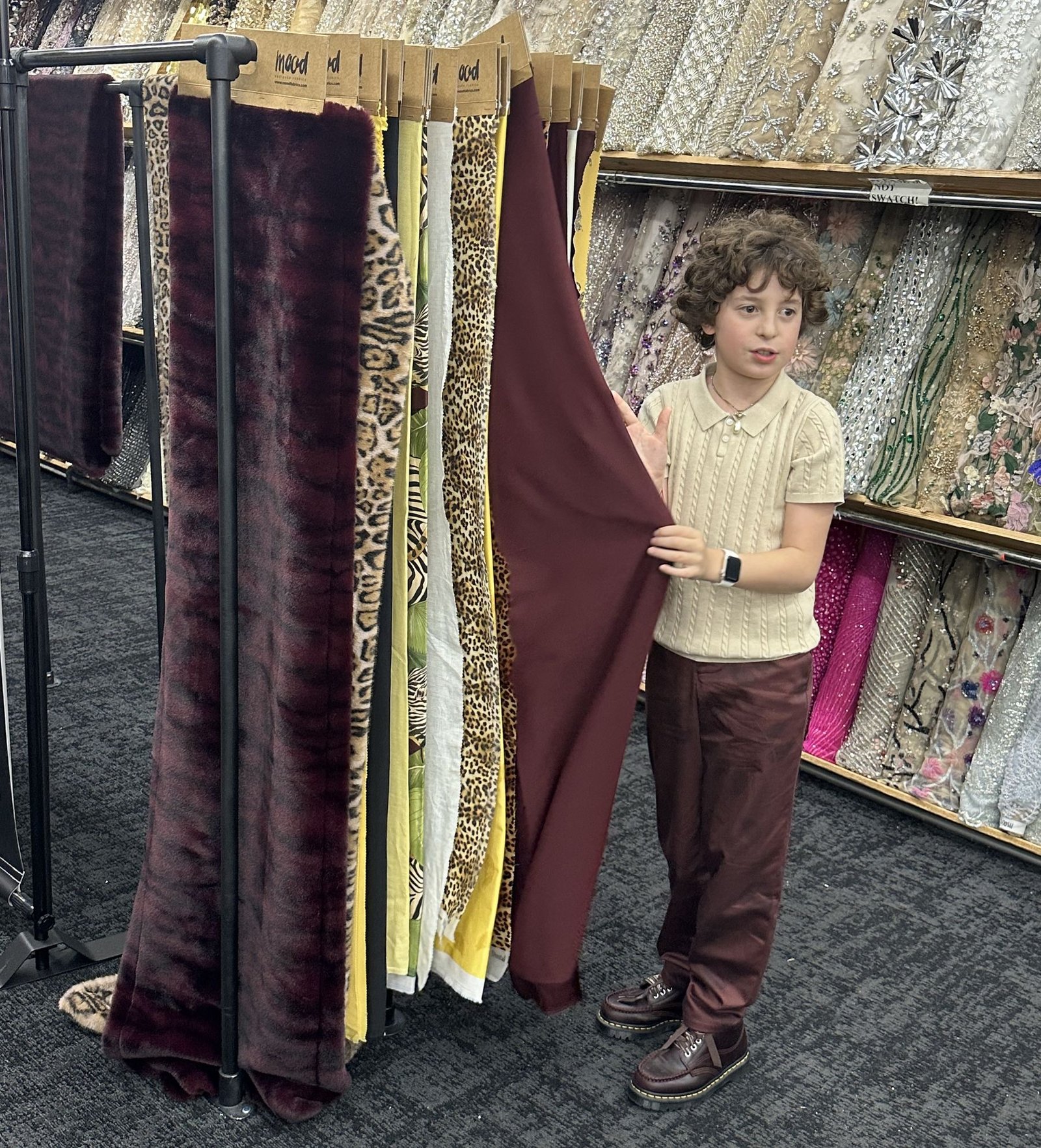
The 15-fabric collection, personally selected and annotated by Alexander, extends the young designer’s fashion identity into textiles, pairing his bold prints with a range of materials positioned around lower-impact and sustainability considerations.
The collection includes BCI Cotton, recycled polyester faux fur, ECOVERO viscose rayon challis and European Flax linen, alongside Alexander’s signature “Wings” print in multiple colourways.
For the young designer, the move into fabric represents an expansion of the creative process—from designing garments to determining the materials from which future designs can be made.
“At the core of this collection is the idea that one small choice can make a big difference,” Alexander said. “Sustainability doesn't have to mean being perfect. It can be about the tiny choices we make every day and changing little habits that add up to something much bigger.”
From runway designer to textile creator
Alexander began designing and sewing clothes at the age of four and attracted international attention after his work gained visibility during the COVID-19 pandemic.
He holds a Guinness World Record as the youngest person to design and produce a solo runway show. In 2026, he also became the youngest designer to debut at Paris Fashion Week, presenting a collection made predominantly from sustainable and deadstock materials.
The Mood collaboration marks another step in that progression, putting the designer's name directly onto a commercial textile collection.
The collection is titled “A Safari Made From Happiness!” and is built around Alexander’s preference for strong colour, distinctive texture and expressive prints.
Rather than treating fabric as a secondary component of fashion, the collection positions material selection as part of the design proposition itself.
Two more Guinness records
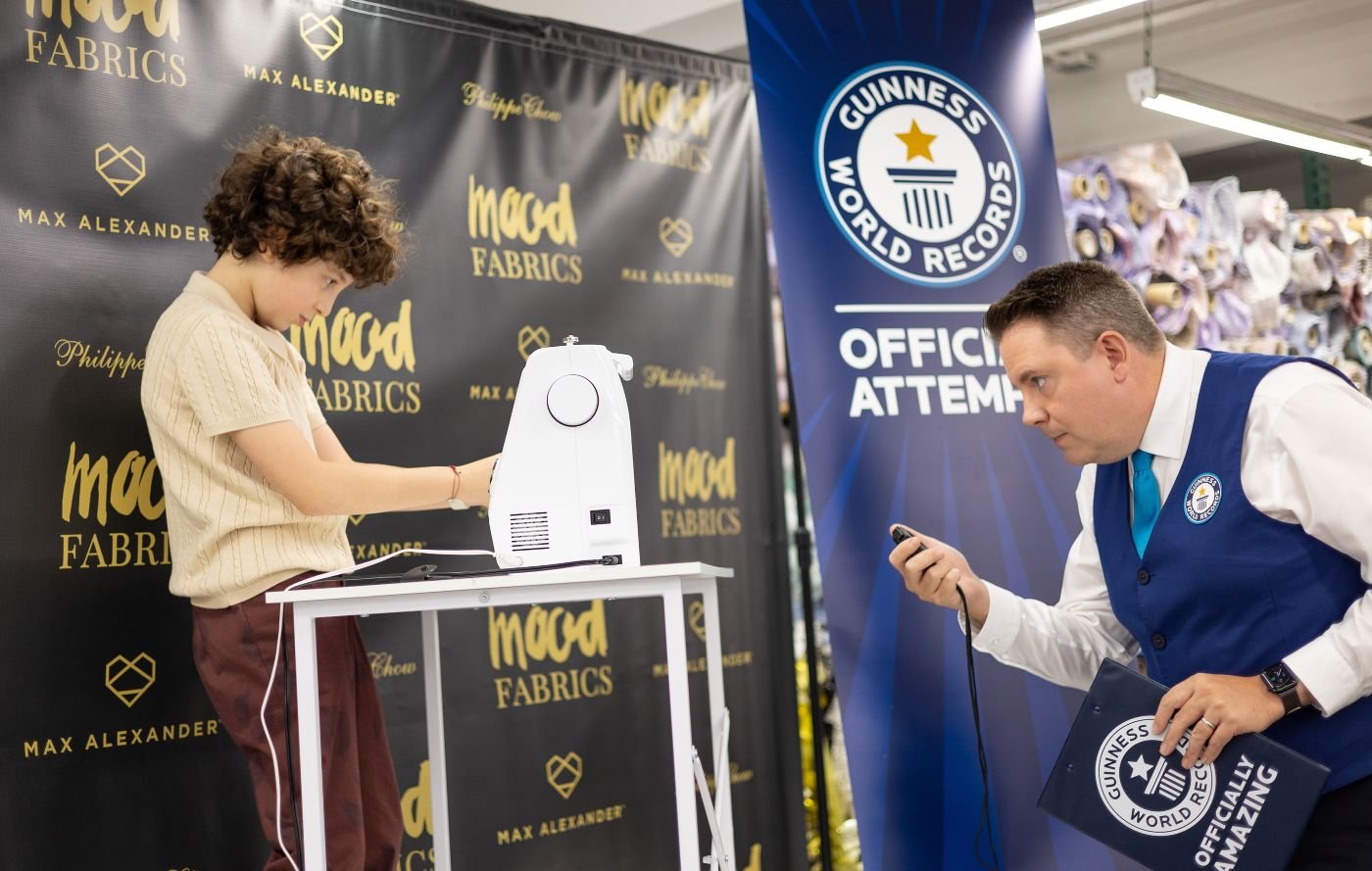
The New York launch also became a record-setting event for Alexander.
Under the supervision of a Guinness World Records adjudicator, he secured two additional titles:
- Youngest person to release a fabric/textile line
- Fastest time to thread an automatic sewing machine
The achievements add to a growing list of records attached to Alexander’s unusually early fashion career.
Mood partnership broadens the textile proposition
For Mood Fabrics, the collaboration connects its established fabric-retailing platform with a young designer whose audience extends well beyond traditional sewing and fashion communities.
The company, known internationally through its long-running association with Project Runway, serves professional designers as well as home sewers and makers. Its retail model combines physical showrooms, where customers can examine fabrics in person, with online and in-store purchasing.
The Mood × Max Alexander collection is available through Mood’s online platform and is planned for availability at its retail locations nationwide.
The partnership also reflects the increasing intersection of fashion, creator culture and textiles, as designers increasingly use distinctive materials and proprietary prints to establish a broader identity around their brands.
At 10, Alexander is therefore entering fashion not simply as a young clothing designer, but as a creator whose portfolio now extends from runway collections to the fabrics themselves.
For an industry increasingly focused on material choices, circularity and the environmental footprint of fashion, his first textile line places those questions at the beginning of the design process—where the fabric is selected before the garment takes shape.