
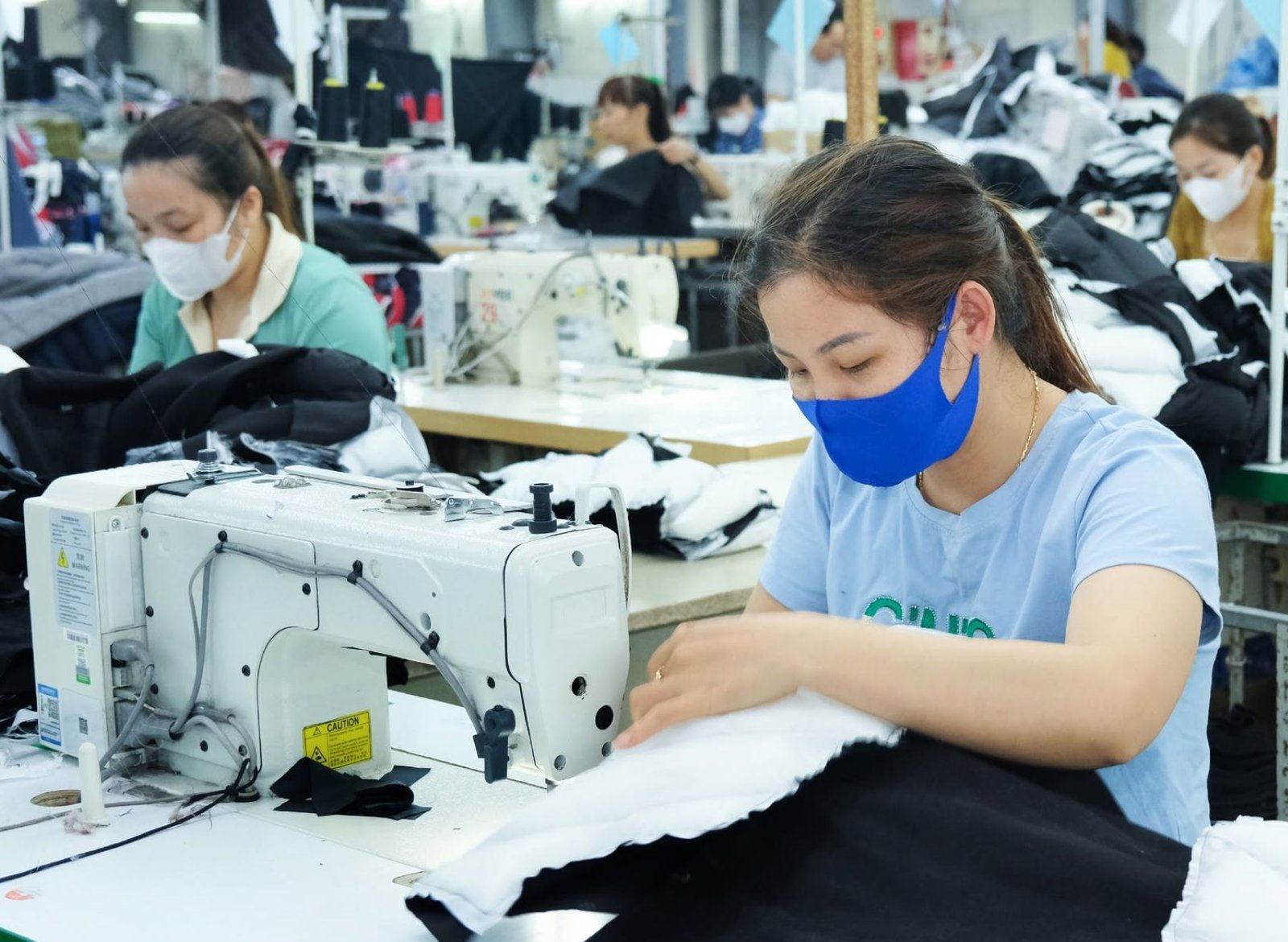
HANOI — Vietnam's textile and garment industry logged $27 billion in exports over the first seven months of 2026, up 2.67% year on year, even as U.S. tariff shifts, volatile freight costs and rising input prices squeezed manufacturers across the sector. Apparel alone accounted for $21.1 billion of that total, while fiber and textile-material shipments also grew strongly, helping the industry widen its trade surplus to $11.76 billion, up 4.3%, according to Truong Van Cam, Vice Chairman and Secretary General of the Vietnam Textile and Apparel Association (VITAS).
To hit a full-year target of more than $48 billion — a 5-6% rise over 2025 — Cam said exporters need to sustain monthly shipments of roughly $4.3-4.5 billion through the rest of the year, a pace he called achievable if firms keep tracking demand shifts and adjusting to swings in global trade.
The more pressing issue, in Cam's telling, is a widening tariff disadvantage against Vietnam's regional rivals. A U.S. duty of 12.5% on Vietnamese goods under Section 301 of the Trade Act of 1974, tied to forced-labor concerns, leaves Vietnam paying more than all but two of its top ten competitors in the U.S. market — China and Turkey are the only others facing a higher rate, while the rest, including Bangladesh, Cambodia, Indonesia and Malaysia, pay 10%. Those four countries also stand to gain a three-year, zero-tariff quota if they step up purchases of U.S. cotton and textile inputs. Vietnam does not receive that quota, despite already being the largest buyer of U.S. cotton — importing 789,000 tons worth over $1.3 billion in 2025, and another 538,000 tons worth close to $900 million in the first half of 2026 alone.
Vietnam has moved to close the legal gap behind the U.S. complaint: on July 22, 2026, the government issued Decree 292/2026/ND-CP, barring imports of goods made wholly or partly with forced labor. Cam described it as rounding out the country's legal framework on the issue, part of a broader push to diversify export markets and lean more on the free trade agreements Vietnam has already signed.
Underneath the tariff dispute sits a more structural weakness: import dependency. Cam identified the domestic supply of raw materials and textile inputs as the industry's biggest bottleneck, with 60-70% of materials still sourced from abroad depending on the product line. That leaves manufacturers exposed under newer-generation trade deals like the EU-Vietnam FTA and the CPTPP, which impose strict rules of origin — two to three stages of domestic production, or a regional value content of at least 40%, before goods qualify for preferential tariffs. Cam pointed to joint ventures between Chinese firms and established domestic manufacturers, paired with clear technology-transfer terms at each stage, as one way to build that capacity faster.
Beyond the export numbers, VITAS is pushing a three-part strategy to lift what Cam calls the quality of the sector's growth: automating production to raise pay for the roughly 1.86 million workers employed directly by textile and garment enterprises, plus another 1.5 million in related cooperatives and household businesses; drawing large-scale investment into domestic dyeing, weaving and materials production to raise localization and unlock more FTA tariff preferences; and growing exports while trimming imports to widen the trade surplus. Cam also flagged a parallel need to train specialized workers — in textiles, dyeing and eco-design — to keep pace with the technology upgrades the strategy depends on.
Taken together, Cam's comments describe an industry outperforming on paper while racing to close the tariff and supply-chain gaps that will determine whether that growth holds.
Key figures
- $27B — exports, Jan–Jul 2026 (+2.67% y/y)
- $11.76B — trade surplus, same period (+4.3% y/y)
- $48B+ — full-year 2026 export target (+5–6% vs. 2025)
- 12.5% — U.S. Section 301 tariff on Vietnamese goods, vs. 10% for most regional competitors
- 60–70% — share of raw materials/textile inputs still imported
*Based on comments from Truong Van Cam (VITAS) and carried by VCCI's Center for WTO and International Trade.