TCF POST Report
COLUMBIA, S.C. — Fiber artists are actively incorporating waste reduction, reuse and recycled materials into their production, but the higher cost of sustainable inputs, sourcing constraints and consumer price expectations are limiting the economic scalability of these practices, according to a Spring 2026 University of South Carolina thesis by Hallie R. Cole.
Titled Crafting Sustainability: Fiber Artists and the Limits of Sustainable Production, the research examines sustainability at the micro level of fiber-art production, focusing on sourcing, production decisions, pricing and the relationship between makers and consumers. The study argues that individual fiber artists can demonstrate sustainable production in practice, but their ability to expand those efforts depends on the market and operational systems around them.
Waste reduction dominates sustainable practices
The survey covered 68 self-identified fiber artists. Nearly 78% said they consciously minimize waste, including through yarn-scrap reuse and zero-waste designs, while about 57% reported using recycled or upcycled materials. Overall, 72% said they implemented at least two sustainability practices and 22% used four or more.
The findings reinforce the potential of fiber-based craft models to support circular production through material reuse, longer product lifecycles and localized making. The research also identifies fiber artists as direct sustainability decision-makers because they control choices ranging from fiber selection and sourcing to waste management and production methods.
However, sustainability is not automatic. The survey found that limited availability and accessibility of sustainable materials was cited by 63.2% of respondents attempting sustainable sourcing, while 55.9% identified the cost of sustainable materials as a challenge. Limited knowledge or resources was cited by 33.8%.
When respondents were asked about barriers to practising sustainability more broadly, the cost of sustainable materials and the time or effort required for sustainable sourcing each affected 64.7% of participants. Limited availability affected 34 respondents, while 27 cited a lack of knowledge of sustainable materials.
Practical considerations can outweigh environmental impact
The research also found that environmental considerations were not the leading sourcing priority. Aesthetic qualities were rated highly important by 82.4% of respondents, followed by material quality at 70.6% and price at 57.4%. Environmental impact was rated highly important by only 26.5%.
The findings suggest that makers are balancing sustainability against practical production requirements rather than treating environmental impact as an independent purchasing criterion.
That has implications for sustainable-material suppliers and textile businesses seeking to reach small producers. Availability, affordability, performance, quality and aesthetic appeal remain critical alongside environmental credentials.
Handmade value confronts fast-fashion price expectations
Pricing emerged as another structural constraint. Only 26 of the 68 respondents—about 38%—sold their work, limiting the size of the sample for pricing analysis. Among sellers, roughly one-quarter identified each of three leading pricing difficulties: translating the fair value of labor into an attractive price, limited social awareness of the value of slow fashion and fiber art, and customers’ unwillingness to pay higher prices. Another 20.8% cited difficulty calculating labor value.
A separate exercise revealed a gap between what respondents believed handmade fiber products should cost and what they said they would actually pay. While 46.4% expected a handmade item to cost more than 50% above a comparable fast-fashion item, the share willing to pay that level of premium was 23.2 percentage points lower.
The study describes this as an intention-behavior gap. Importantly, the research did not survey consumers directly; participants were asked to answer some questions from the perspective of their consumers or a general consumer. The authors therefore caution that the consumer-related conclusions reflect producers’ perceptions rather than independently measured consumer purchasing behavior.
Creative reuse can reduce material barriers
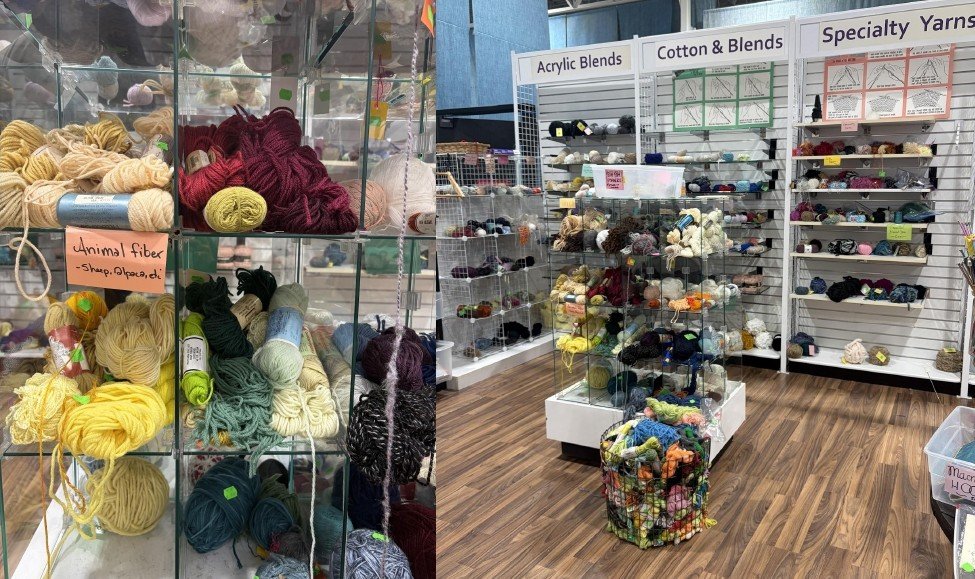
The ReCraft Creative Reuse Center case study in Greenville, South Carolina, illustrates one possible support mechanism. The donation-based center redistributes reusable creative materials and operates a MakerSpace designed to increase accessibility and experimentation.
In 2025, ReCraft diverted more than 150,000 pounds of its 174,406 pounds of material intake from landfill, representing an 86.7% diversion rate. Its resale model also provides lower-cost inputs: the research gives the example of natural cotton yarn costing less than $3 at ReCraft compared with at least $20 at a traditional craft retailer.
The case study found that reuse infrastructure can reduce material costs, increase access to reclaimed inputs and support knowledge-sharing. At the same time, fluctuating donated inventory means artists often have to adapt their designs to the materials available rather than sourcing exactly what was originally planned.
Sustainability needs market infrastructure
The thesis concludes that the main constraint is not necessarily makers’ willingness to adopt sustainable practices, but the operational and commercial conditions in which they work. Greater consumer understanding, wider access to sustainable materials and stronger institutional or community support could help narrow the gap between sustainable production and market viability.
For the wider Textile, Clothing and Footwear industry, the research points to the importance of looking beyond material innovation alone. Sustainable production also depends on accessible sourcing channels, realistic pricing, consumer education and infrastructure capable of connecting materials, makers and end markets.
The study itself remains exploratory: its 68-person sample was primarily U.S.-based, used nonprobability sampling, and included only 26 respondents who sold their work. The author also notes that the participants may have had greater sustainability awareness than the wider fiber-arts population.