* “European Fashion in Ottoman Istanbul: Women and Social Class,” by historian Dr. Anastasia Falierou, published by Brewminate.
How 19th-century fashion transformed women’s clothing, consumption and social identity in the Ottoman capital
In 19th-century Istanbul, fashion became a visible marker of a society in transition. As the Ottoman Empire pursued reforms along European lines, women’s clothing increasingly reflected new economic, social and cultural connections between Istanbul and the West. The change was particularly significant among Muslim upper- and middle-class women, while the city’s Greek, Armenian, Jewish and Levantine communities helped create channels through which European styles circulated.
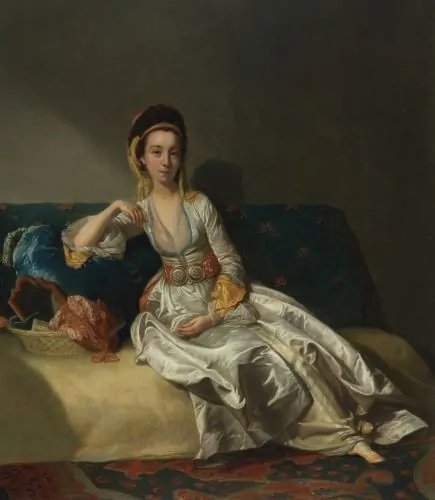
At the beginning of the century, two broad modes of dress coexisted: alaturca, the traditional Ottoman style, and alafranga, the European mode. Traditional Muslim women’s dress consisted of layers including the loose şalvar trousers, gömlek chemise and ankle-length entari robe, often supplemented by garments such as the hırka, cepken and kaftan. Fabrics, embroidery and garment details were closely associated with social and economic status.
The transformation accelerated as European influence expanded. The Ottoman-British commercial treaty of 1838 was followed by a larger European presence in Istanbul and a growing supply of imported goods, including clothing. The Tanzimat reforms of 1839–1876 further encouraged Western lifestyles among the upper classes. Beyoğlu and Pera became important commercial and social centres, filled with European-style shops, restaurants and department stores.
Women’s clothing itself evolved into hybrid forms before European fashion became dominant. The entari grew longer and developed new cuts, while traditional garments were combined with European-inspired bodices and other details. The ferace and yaşmak, worn outdoors, also changed: the ferace acquired wider necklines and richer decoration, while accessories such as parasols became part of fashionable appearance.
The decisive shift came between 1860 and 1870. European fashion had moved from the imperial harem into the wardrobes of elite Muslim women, who looked to palace life as a model. By the 1870s, Parisian-inspired dresses, long trains, lace, ribbons, flowers, gloves, hats and parasols had become part of elite fashion. Crinolines were later replaced by the pouf, while traditional şalvars and embroidered entaris increasingly receded among fashionable urban women.
This was also the beginning of a more sophisticated fashion business in Istanbul. European tailors established firms, particularly in Beyoğlu, while seamstresses served wealthy women in their homes. Department stores sold ready-made clothing, and elite dressmakers travelled to Paris, London and Vienna to study the latest trends. Fashion magazines and women’s periodicals published dress patterns, photographs and reports, allowing styles to circulate beyond direct contact with Europe.
By the end of the century, European fashion had become deeply embedded among Istanbul’s upper classes. Clothing was increasingly less a marker of religious or ethnic identity and more a sign of social status. Fashion, in this sense, was not simply a change in silhouette: it became a record of Istanbul’s transformation into a more interconnected, cosmopolitan society.