Singapore's GLG Corp wrote off about US$21m owed by contract manufacturer GLIT Holdings, breached bank covenants, then ended the relationship
TCF POST Special Report
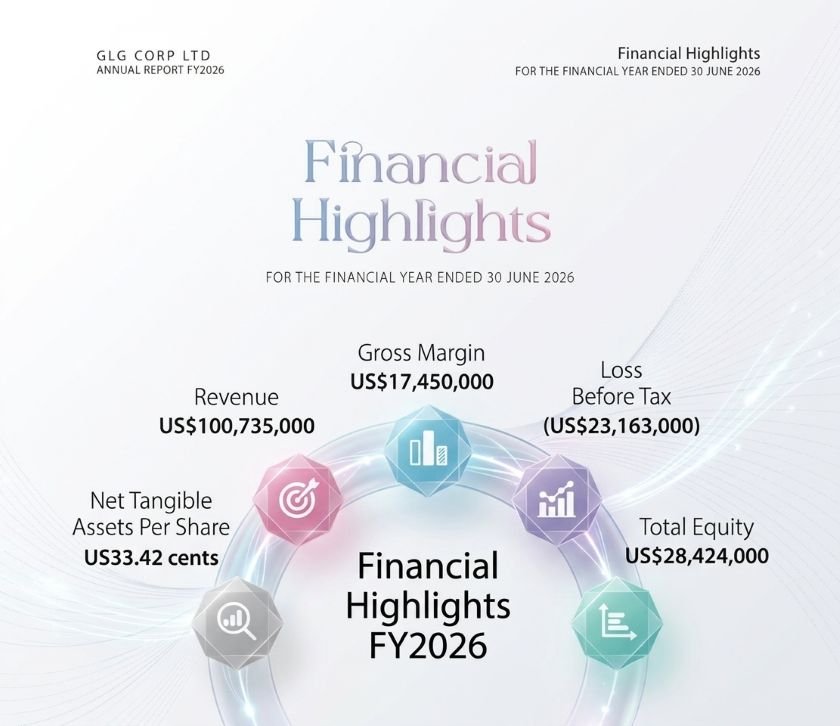
GLG Corp Ltd, the Singapore-headquartered apparel group trading as Ghim Li Group, lost US$23.2 million in the year to 30 June 2026, up from US$1.4 million a year earlier. Almost all of the damage traces to one outsourcing partner: GLG set aside about US$21.4 million against money owed by GLIT Holdings, a contract manufacturer it has since dropped.
Without the charge, the pre-tax loss would have been about US$1.6 million, matching the previous year. A single counterparty therefore accounts for nearly the whole swing.
How big the hit was
The provision totals US$21.45 million: US$17.45 million against trade receivables and US$4.0 million against security deposits GLG had paid GLIT. That is roughly a fifth of the group's US$100.7 million annual revenue. About US$3.5 million remains on the books, which management judges recoverable through expected recoveries, legally enforceable offsets and post-year-end settlements.
The balance sheet shows the damage. Total receivables fell 62.3% to US$13.1 million, other financial assets dropped 99.6% to US$0.02 million as the deposits were written off, and retained earnings slid from US$51.9 million to US$28.8 million. Total equity now stands at US$28.4 million.
The charge landed on a business already under strain. Revenue fell 8.9% to US$100.7 million from US$110.5 million on tariff pressure, price competition, a lost product line at a major customer and an order GLG declined over credit risk. Gross margin edged up to 17.3% from 17.0%, and administrative costs fell 11.3% to US$9.0 million.
Why GLG walked away
A strategic outsourcing review concluded that GLIT's declining cost competitiveness, supply-chain risks and margin pressures made the arrangement unsuitable for GLG's future needs. The company served the required three months' notice and terminated the outsourcing agreement on 11 August 2026, announcing it the next day.
The audit committee stressed that the provision is an accounting judgement about recoverability, separate from the commercial decision to terminate. Auditor BDO listed the provision as a key audit matter, and the committee said it is satisfied with how the provision and its disclosures were handled.
Covenants breached, then waived
The write-down cut tangible net worth below minimum thresholds in some bank facilities, putting the group in breach of covenants. Lenders have since issued formal waivers, and the directors prepared the accounts on a going-concern basis. They point to operating cash flow of US$8.5 million (up from US$2.6 million), cash of US$14.7 million (up from US$10.4 million), unused facilities of US$48.6 million, and current assets exceeding current liabilities by US$11.5 million.
Borrowings fell 9.6% to US$23.6 million. Retained earnings dropped from US$51.9 million to US$28.8 million, and total equity stands at US$28.4 million.
On 24 August, GLG also took an option to buy a building for US$7.4 million, paying a non-refundable 10% fee. It plans to fund up to 80% with a 20-year bank loan, a move the company cites as a sign of continued lender support.
Rerouting production
With GLIT out, orders are being redirected to a component manufacturer in Cambodia and a new subcontractor in Vietnam, with other subcontractors under evaluation. Management says it expects no disruption to customer deliveries.
The group's own footprint is modest but integrated. Its Cambodian arm, GG Fashion, runs 50 sewing lines with about 1,800 staff and capacity of 1.4 million pieces a month. In Malaysia, the Maxim vertical fabric mill, founded in 1972 with 400 employees, supplies in-house fabric and supports quick replenishment orders. Across a three-country supply network, GLG shipped 23.4 million pieces in the year.
Fabric as the growth lever
The brightest line in the results is external fabric sales, which more than tripled to US$7.4 million from US$2.1 million, driven by new customers and now about 7.4% of group sales. Management calls this fabric-first strategy a key competitive advantage, letting it compress lead times for customers who need speed.
Management also points to a completed solar installation at the Maxim mill, factory automation, and wider use of 3D sampling and AI-assisted design to cut costs.
Costs and outlook
Chairperson Estina Ang Suan Hong and CEO Felicia Gan Peiling cite the outbreak of conflict in Iran as an added pressure, pushing up oil prices and with them utilities, freight and raw material costs, while factory labour rates kept rising and customers stayed price-sensitive.
Looking to FY2027, management expects conditions to stay challenging amid volatile demand and possible changes to tariff regimes, and says it will focus on working-capital discipline, cost control and liquidity. Shareholders will vote on the re-appointment of auditor BDO at the annual general meeting on 27 November 2026.