TCF POST Report
November 5, 2026 -Textile traceability is shifting from labels and certificates toward identifiers embedded in the material itself, so that origin, composition and recycled-content data stay attached to a fiber through processing, resale and recycling. Several providers are working on this. SMX (Security Matters) has published a run of pilots and partnerships over the past year that show where the technology stands.
The problem
Once fibers are shredded, blended, spun and dyed, origin and composition are hard to verify. Recycled-content claims are difficult to audit when feedstock is mixed. After the first sale, documentation is often separated from the product, which affects resale, authentication and circularity. Buyers face growing scrutiny over these claims, and certificates alone struggle to meet it.
How it works
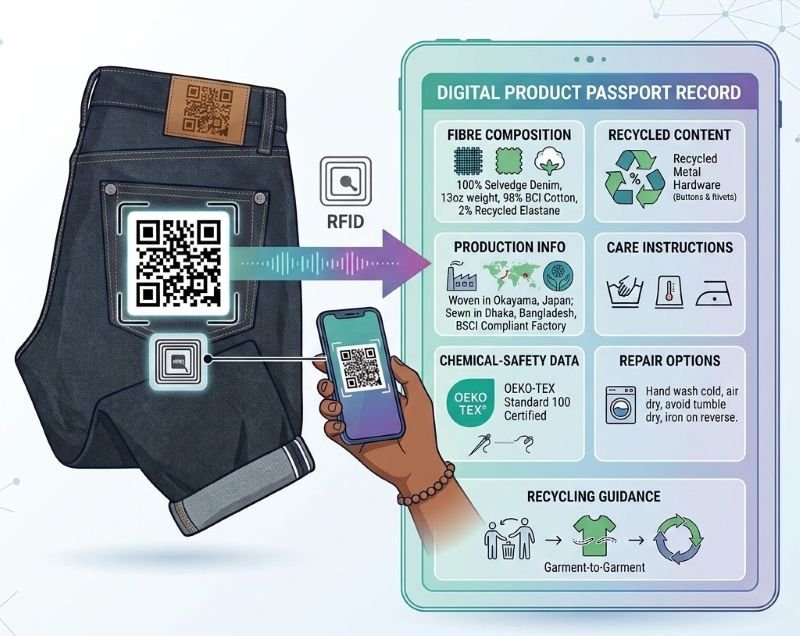
Systems pair an invisible marker in the material with a reader that detects it later and a digital material passport that links the physical item to its records. The key question is whether the marker survives industrial processing, since a digital record is only as reliable as its link to the physical material.
Where the evidence stands
SMX reported a December 2025 cotton pilot in which markers stayed detectable through recycling, spinning, fabric formation and the finished textile. It extended the work to denim in January 2026 and started a U.S.-grown cotton origin initiative with TruCotton®. Work with France’s CETI on fibers and nonwovens includes independent post-processing detection, still ongoing. A digital passport platform launched in May, and the approach is being extended to luxury textiles, leather and precious metals. All results are company-reported, with no independent test data or named commercial customers disclosed.
Who is affected
- Brands: Physical verification could back up origin and sustainability claims, but depends on supplier participation.
- Mills and spinners: Marking and reader steps add process requirements, with cost and effects on dyeing and finishing unknown.
- Recyclers: Provable feedstock composition could raise recycled fiber value if detection holds across repeated reprocessing.
- Asian exporters: Buyers and regulators increasingly want data-backed supply chains, so early readiness could become an advantage and its absence a barrier.
Open issues
Independent validation, per-tonne cost at commercial scale, durability through washing and finishing, interoperability between competing systems, alignment with certification schemes and digital product passport rules, and data governance all remain unresolved.
Outlook
Material-level traceability has moved from concept to pilot but not to verified, large-scale use. Independent validation, published costs and named mill and brand adoption are the indicators to watch. Until then it is a tool to monitor and test, not a replacement for existing certification and audits.