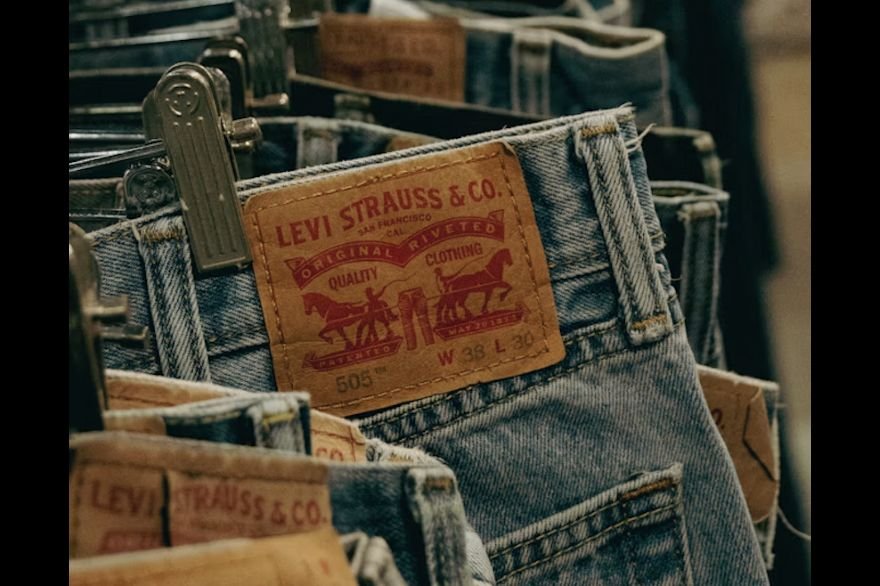
The denim giant is using common data tools and industry partnerships to cut emissions and water use across hundreds of independent factories.
TCF POST Report
NORTHAMPTON, MA, Nov. 13, 2026: Levi Strauss & Co. (NYSE: LEVI), the American denim giant best known for inventing the blue jean and its iconic 501s, says it is managing the environmental impact of its supply chain through standardized supplier data, shared renewable energy programs and water targets that extend beyond factory walls.
The company says more than 90 percent of its greenhouse gas emissions come from its supply chain. According to its 2025 Sustainability Goals and Metrics Report, apparel production alone accounts for 72 percent of that supply chain footprint. Because Levi’s relies on independent mills, dye houses and sewing factories, Jennifer DuBuisson, its senior director of sustainability, told Cascale’s Source of Good Podcast that the company depends on common tools and pre-competitive collaboration. Cascale has not independently verified the claims.
The data layer
Levi’s requires key suppliers, covering more than 80 percent of its global product units, to complete the Higg Facility Environmental Module (Higg FEM). The tool is stewarded by Cascale and available through Worldly, and Levi’s has used it since 2017 to track water, waste, energy and emissions. DuBuisson said the data lets the company be “more targeted” in how it engages factories. Levi’s aims for 100 percent of its Tier 1 key suppliers to complete the module annually.
Progress against targets
Levi’s reports mixed results in its FY2025 figures:
- Emissions: Supply chain emissions from tops and bottoms fell 10 percent from the 2022 baseline. The SBTi-validated target is a 42 percent absolute cut by 2030.
- Water: Key wet-finishing suppliers in high-water-stress regions cut freshwater use by 23 percent from the 2018 baseline, well short of the 50 percent target set for 2025.
- Waste: Key suppliers diverted 74 percent of nonhazardous waste from landfills in 2025.
Renewable power for mills
Fabric mills and dye houses account for a large share of apparel emissions. In September 2026, Levi’s announced the Fashion Renewable Collaborative (FRC), co-founded with Marks & Spencer and Schneider Electric’s SE Advisory Services. The group offers suppliers technical guidance, digital learning modules, power purchase agreement support, energy attribute certificates and help with on-site renewable projects. By aligning requirements across brands that share suppliers, it aims to speed the move off fossil fuels. It is seeking 10 additional brand partners by the end of next year.
“Beyond the Blue” water strategy
The 2030 strategy targets a 15 percent absolute cut in freshwater use across manufacturing suppliers, from a 2022 baseline. It also targets 40 percent recycled or reused water in Tier 1 and Tier 2 manufacturing, plus investment in water, sanitation and hygiene projects in priority sourcing regions. Targets are set using the WRI Aqueduct Water Risk Atlas, so suppliers in water-stressed regions face stricter standards. “If climate change is the shark, then water is the teeth,” DuBuisson said.
From cotton fields to the closet
- Pakistan cotton: Levi’s is working with WWF-Pakistan to train cotton farmers in regenerative agriculture, aiming for nature-positive practices across 10,000 hectares (24,000 acres) by 2028.
- Wear Longer Project: An internal U.S. study found 41 percent of Gen Z lack basic clothing repair skills, while 35 percent would keep garments longer if they knew how to fix them. The program teaches tailoring, mending and customization. It reached nearly 90,000 students in its first nine months and has since expanded to Europe.
Notes
Levi’s is pairing supplier data, shared energy procurement and basin-level water goals with consumer repair education. The 2025 water shortfall shows how hard the targets are to meet, even for a legacy denim leader.