

TCF POST Report
The Cambodian government sees that, despite global uncertainty, the trend in investments and export shipments in the garment, footwear, and travel goods sector is fairly encouraging.
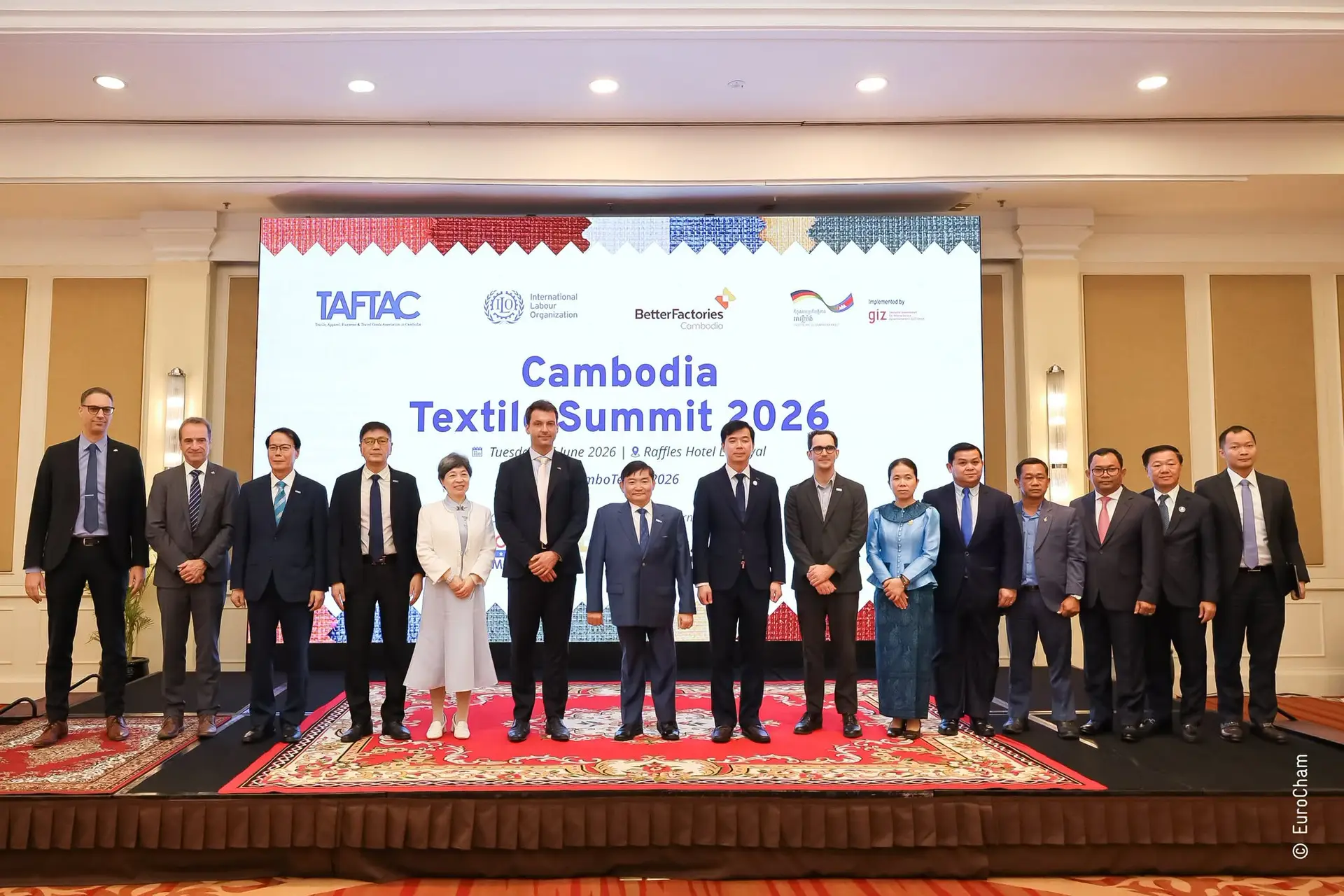
“Investment has remained strong, with 262 Qualified Investment Projects approved between 2025 and April 2026 worth USD 1.76 billion, expected to create 320,000 jobs,” Cambodia’s Labour Minister, Heng Sour, said on Tuesday. He was speaking at the Cambodia Textile Summit 2026 in Phnom Penh.
Sour informed the audience, including investors and importers, that after exports reached US$16 billion in 2025 (growing over 16 percent year‑on‑year), shipments amounted to USD 6.44 billion for the first five months in 2026, representing a 6.4% growth YoY. This is highly satisfactory, as Sour noted, “The industry is navigating trade hurdles, fuel shocks and worldwide instability.”
As of May, this year, there are about 1.2 million workers employed across 2,000 enterprises, including 1,468 garment factories, 275 travel goods producers, and 231 footwear plants in Cambodia. They account for 52 percent of Cambodia’s total export earnings.
The Textile, Apparel, Footwear & Travel Goods Association (TAFTAC) in Cambodia reported that factory openings rose from 234 in 2022 to 330 in 2025, while closures fell to 29.
“The sector has repeatedly demonstrated resilience through crises and shifting trade policies, and industry indicators show that sustained confidence is there,” said TAFTAC’s Deputy Chairman Robert Hwang. TAFTAC reported the sector’s exports of US$16.2 billion last year, accounting for 52 percent of Cambodia’s total shipments.
The textile summit highlighted that Cambodia’s garment sector remains on a solid growth trajectory, supported by investment, expanding capacity, and sustained buyer confidence.
The Cambodian government officials acknowledged challenges ahead as the Southeast Asian country prepares to graduate from LDC status in 2029, which will result in an erosion of preferential access in the EU and other markets.
The government is actively promoting higher‑value manufacturing, fabric production, automation, and workforce training to maintain and enhance competitiveness.