

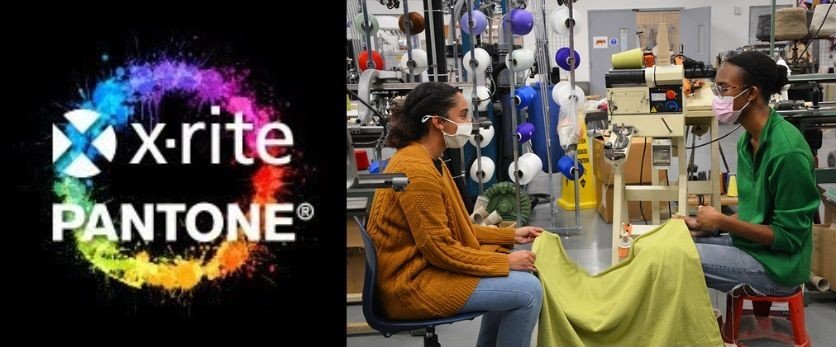
GRAND RAPIDS, Mich. — In a strategic move to bridge the gap between academic training and modern industrial workflows, X-Rite Pantone and the Fashion Institute of Technology (FIT) of the State University of New York have announced a landmark partnership. The collaboration aims to embed advanced digital color science and end-to-end management systems directly into the curriculum of FIT’s Textile Development and Marketing (TDM) department.
As part of the initiative, X-Rite Pantone is outfitting the college with its industry-standard color measurement devices, quality control software, and visual evaluation technology. By granting students access to the exact professional ecosystems utilized by leading global apparel and soft goods brands, the partnership seeks to fast-track the transition from traditional analog sampling to data-driven digital workflows.
Key Highlights for Industry Professionals
- Bridging the Digital Skills Gap: TDM students will gain hands-on experience managing color from initial design inspiration to the finished product, aligning physical standards with spectral data.
- Supply Chain Optimization: The curriculum emphasizes how digital color communication streamlines coordination between global brands, mills, dye houses, and manufacturers.
- Driving Sustainability & Speed-to-Market: Utilizing integrated color tools minimizes physical shipping iterations, cuts material waste, supports nearshoring initiatives, and accelerates development cycles.
- Collaborative Industry Research: Beyond classroom instruction, X-Rite Pantone and FIT will partner on research initiatives to identify best practices for digital adoption, supply chain transparency, and resilient manufacturing processes.
Industry Perspectives
Industry leaders emphasize that mastering digital color is no longer merely a technical asset, but a fundamental business strategy for modern textile supply chains.
“By partnering with FIT, we’re providing the knowledge and tools future designers and textile professionals need to align physical color standards, spectral data, and digital workflows,” said Raj Shah, Vice President of Marketing at X-Rite Pantone. “Digital color skills play a critical role in helping brands design for achievability, improve collaboration across global supply chains, and bring products to market faster.”
For academic leadership, the alliance represents an extension of FIT’s legacy of forging strong industrial partnerships to give graduates a distinct competitive edge.
“Combining our TDM faculty’s deep textile expertise with X-Rite Pantone’s industry-standard color technology gives our students a distinct competitive advantage,” noted Shannon Maher, Dean of FIT’s School of Business and Technology. “It prepares them to champion faster, more sustainable production practices across the global market.”
Notable Alumni
As a premier global hub for creative and business education, FIT boasts an exceptional roster of industry icons, including world-renowned fashion designers such as Calvin Klein, Michael Kors, and Norma Kamali.
Potential Industry Impact
This collaboration bridges a critical gap between higher education and the modern textile floor, carrying significant implications for global supply chains:
- Accelerated Digital Transformation: By familiarizing future product developers and textile executives with color management software and spectrophotometers early, the pipeline of digitally fluent talent entering mills, buying houses, and brand headquarters expands immediately.
- Enhanced Sustainable Compliance: Minimizing physical strike-offs and reducing iterations between brands and remote dye houses directly shrinks carbon footprints and material waste, aligning with tightening global environmental regulations.
- Resilient Sourcing and Nearshoring: Standardized digital color communication reduces the communication friction inherent in multi-country sourcing, making nearshoring and regional manufacturing hubs more agile and competitive against traditional production bottlenecks.