

TCF POST Report
Warsaw, Poland: LPP, one of Central Europe’s fastest-growing fashion retailers, has overhauled its in-store used-clothing collection programme by appointing textile-recovery specialist Wtórpol as its exclusive operational partner. The move strengthens the Polish apparel group’s circular economy strategy as new textile waste regulations drive a sharp increase in post-consumer garment collections.
The company, which operates the Reserved, Cropp, House, Mohito and Sinsay brands across 47 international markets, said the revised model will help manage growing collection volumes while ensuring donated garments are reused or recycled more efficiently.
Collection Volume Surges Elevenfold
LPP, which introduced in-store clothing collection points in 2018, reported that garments collected through its retail network increased 11-fold over the past year, largely due to Poland’s mandatory separate textile waste collection rules.
The rapid increase exposed the limitations of the previous charity-led model, under which donated clothing was distributed to people in need. As donation volumes outpaced charities’ logistical capacity and the mix of donated garments did not always match demand, the company sought a more scalable solution.
Explaining the transition, Ewa Janczukowicz-Cichosz, Sustainability Expert at LPP, said:
“With the entry into force of the new regulations and the sudden surge in the volume of donated clothing, we realised that the existing model would need to be adapted to the new situation. We were keen to find a systematic solution that would allow us to maintain a convenient collection method whilst maximising the potential of the donated textiles.”
Wtórpol to Manage Nationwide Operations
Under the revised model, Wtórpol will oversee the programme’s entire operational chain—from collection and transportation to sorting, reuse and recycling.
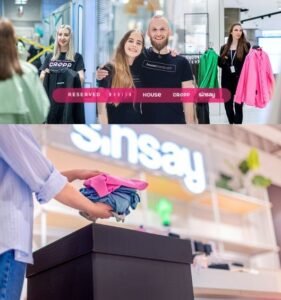
For customers, the collection process remains unchanged. Donation bins will continue to be available across LPP’s network of more than 3,800 stores, with existing containers gradually replaced by Wtórpol-branded bins.
Circular Economy at Industrial Scale
The partnership reflects a growing trend among apparel retailers to build industrial-scale textile-recovery systems that support circular business models.
According to Wtórpol:
- Around 80% of garments collected from LPP stores are reused through second-hand markets.
- Cotton is transformed into industrial cleaning cloths supplied to more than 6,000 companies.
- Wool is recovered as a secondary raw material.
- Remaining textiles are recycled or processed into Refuse-Derived Fuel (RDF).
Wtórpol processes around 76 million kilograms of textiles annually, with all sorting carried out in Poland to maximise reuse.
“What happens to clothing at the end of its useful life is of huge importance for the efficient use of resources. Every year, we process around 76 million kilograms of textiles, giving them a new lease of life or sending them for further processing in line with the principles of the circular economy,” Monika Lipnicka of Wtórpol said.
Sustainability Supports Long-Term Growth
For LPP, the new partnership aligns sustainability with operational efficiency as the company continues to expand internationally. The programme enables the retailer to manage larger volumes of post-consumer textiles while improving material recovery, regulatory compliance and resource efficiency.
The initiative also retains its social impact. For every kilogram of clothing collected, Wtórpol contributes 50 groszy towards programme operations and charitable initiatives designated by LPP.
The company, which has been designing and marketing fashion collections for more than three decades, distributes its products across three continents and employs nearly 63,000 people across Poland, Europe, Asia and Africa.
LPP’s revised collection model illustrates how major fashion retailers are moving beyond donation-based programmes towards professionally managed circular textile systems capable of handling rapidly increasing volumes of used clothing.
With the company listed on the Warsaw Stock Exchange’s WIG20 Index and included in the MSCI Poland Index, the initiative also signals how publicly listed fashion businesses are increasingly embedding circularity into their long-term business and sustainability strategies in response to evolving European regulations.