

TCF POST Special Report
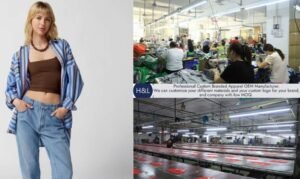
Guangzhou, China — Chinese apparel manufacturers are quietly retooling their production lines. The target is no longer volume alone. It is flexibility. Guangzhou-based Huilin Fashion is one example. The company recently expanded its OEM and ODM services for smaller fashion brands. Its focus now includes startups, independent designers, and e-commerce labels. These businesses often want smaller production runs than traditional factories allow.
A Shift Away from Bulk-Only Manufacturing
For decades, apparel factories in China built their business around large orders. Brands committed to hundreds or thousands of units per design. That model suited big retailers with predictable demand. But global fashion has changed. Social media now drives faster, smaller product launches. Brands release micro-collections, test consumer response, then reorder only what sells. This shift has pushed manufacturers toward lower minimum order quantities. Huilin Fashion now accepts orders starting around 50 pieces per style. That figure depends on fabric type and design complexity. A company representative described the shift plainly. Brands are becoming more cautious about inventory risk, they said. Many now prefer testing products before scaling production.
Reducing Financial Risk for Smaller Brands
Large minimum orders once created real cash-flow pressure for startups. Emerging labels often could not afford thousand-unit production runs. Smaller batch options change that calculation. Brands can test new styles without heavy upfront investment. If a design performs well, factories can then scale up production. Huilin Fashion supports this shift across several garment categories. These include T-shirts, hoodies, denim, jackets, dresses, and streetwear. The company also offers custom printing, embroidery, labels, and packaging services.
From Concept to Finished Garment
Manufacturers adapting to this model also expanded design support. Brands with finished technical packs can move straight to sampling. Others receive help developing patterns, sourcing fabric, and planning sizing. At Huilin Fashion, sample development typically takes about 12 days. Bulk production then follows, usually taking three to five weeks. Timelines vary based on order complexity and material sourcing. This end-to-end structure lets brands work with a single manufacturing partner. It reduces coordination costs across multiple suppliers and vendors.
Quality Control Becomes More Critical
Smaller batch sizes raise the stakes for consistency. Factories must match sample quality across shorter production runs. Huilin Fashion applies inspection checks throughout its production process. These include fabric inspection, measurement checks, and final garment review. Specifications are confirmed before bulk production begins. Consistency matters most for growing brands scaling into new markets. Buyers expect the same quality at higher volumes later.
China’s Supply Chain Advantage Persists
Despite these changes, China remains central to global apparel production. Its textile ecosystem, skilled labor, and logistics networks remain difficult to replicate elsewhere. Manufacturers like Huilin Fashion are pairing that infrastructure with new flexibility. The goal is serving both large retailers and small emerging brands. Shipping options now vary by budget and urgency. Companies offer express delivery, air freight, and sea freight services.
A Broader Industry Trend
Huilin Fashion’s shift reflects a wider pattern across Chinese manufacturing hubs. Factories are adapting to a market that increasingly rewards speed over scale. As direct-to-consumer brands multiply, demand for low-MOQ manufacturing keeps growing. Chinese suppliers appear to be restructuring accordingly, one small order at a time.