

TCF POST Report
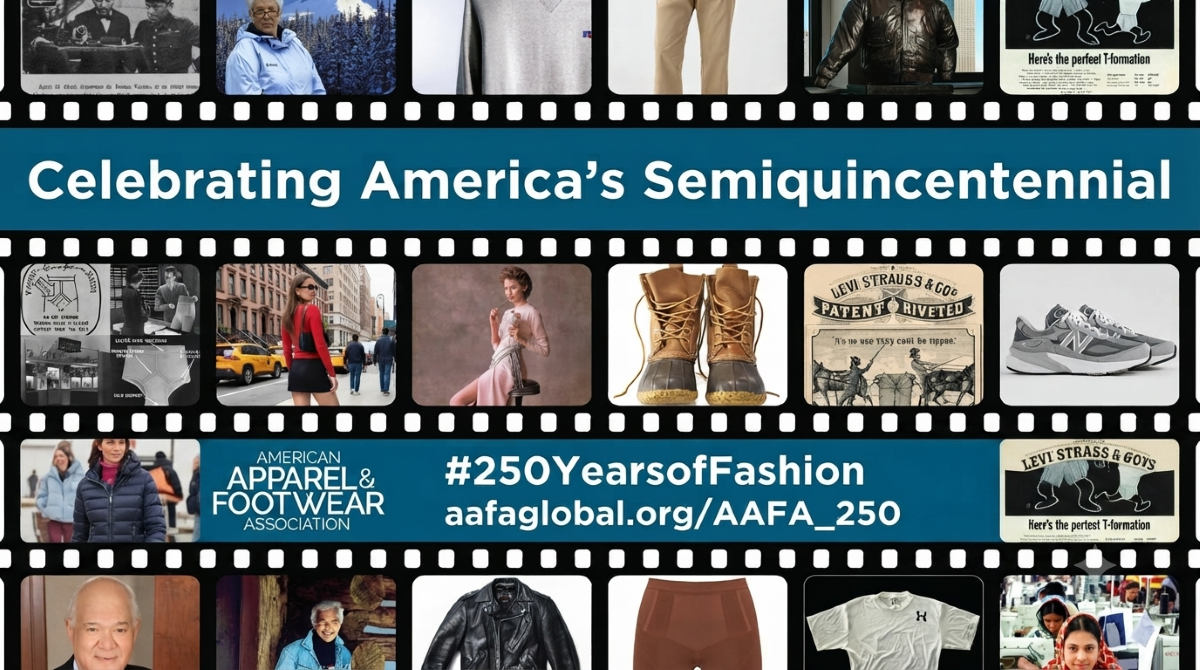
In alignment with the nation’s semiquincentennial celebrations, the American Apparel & Footwear Association (AAFA) has officially launched its landmark digital archival platform, “250 Years of Fashion.”
This platform serves as a comprehensive cultural and historical retrospective, highlighting the profound impact that the TCF (Textile, Clothing and Footwear) sectors have had on shaping American identity, entrepreneurship, and global fashion since the nation’s founding.
“Every article of clothing, every shoe, and every accessory carries a story,” said Steve Lamar, President and CEO of the AAFA. “In many cases, your favorite pair of jeans or most comfortable sweater reflects a story that is profoundly American. The semiquincentennial offers a unique opportunity to celebrate the vibrant heritage behind our iconic brands.”
As an official supporting partner of America250—a nonpartisan initiative overseeing the 250th anniversary of the United States—the AAFA collaborated with its members to open their archives. These corporate heritage submissions provide an inside look at the craftsmanship, societal shifts, and technological breakthroughs that have defined generations of American attire.
The “250 Years of Fashion” platform integrates historical data and narratives from an array of top-tier American brands, showcasing their lasting contributions to fashion and culture. The organization extended special thanks to its partners: Bureau Veritas, Columbia Sportswear Company, Fruit of the Loom, Gap Inc., G-III Apparel Group, Ltd., Gildan, Hanes, Jockey International, Inc., Kayser-Roth Corporation (HUE and No Nonsense), L.L.Bean, Levi Strauss & Co., New Balance Athletics, Inc., Perry Ellis International, Inc., Ralph Lauren, Schott NYC, Under Armour, and Worldwide Responsible Accredited Production (WRAP).
Key Industry Innovations and Contributions
Hanes (Gildan): A pioneer of the modern T-shirt, Hanes revolutionized garment history by evolving traditional one-piece “union suits” into separates. In 1932, the brand supplied tens of millions of cotton undershirts to the U.S. military, catalyzing the globalization of American youth culture.
Jockey: The AAFA platform recognizes Jockey’s innovation in underwear design, most notably the introduction of the “Jockey Short”—the world’s first classic men’s brief.
Columbia Sportswear: The brand pioneered functional layering with the 1986 introduction of the “Interchange System.” The Bugaboo jacket allowed consumers to zip a fleece liner into a waterproof shell, transforming how Americans dressed for extreme weather. The brand evolved from a small distributor into a global powerhouse.
Fruit of the Loom: As one of the world’s oldest registered trademarks, the brand standardized high-quality, affordable cotton underwear and basic T-shirts, making reliable comfort accessible to the everyday American family.
Gap Inc.: Founded in 1969, Gap defined modern casual American style. By synthesizing a democratic aesthetic of denim, khakis, and pocket T-shirts, the brand bridged the generational gap and single-handedly popularized “business casual,” shifting the national workplace paradigm away from rigid suits.
Kayser-Roth Corporation: This brand revolutionized the intimate apparel industry through advancements in nylon technology, fit, and mass-market elasticity, shaping 20th-century hosiery.
L.L.Bean: In 1912, Leon Leonwood Bean revolutionized outdoor footwear with the Maine Hunting Shoe (the “Bean Boot”). Combining lightweight leather uppers with waterproof rubber bottoms, the company established a cornerstone of American utility fashion. Its canvas tote bags and flannel shirts remain symbols of the “preppy” and heritage-outdoor aesthetic worldwide.
Levi Strauss & Co.: In 1873, Levi Strauss and Jacob Davis secured the patent for copper-riveted work pants, officially birthing the blue jean—the most enduring garment in American fashion history and the global blueprint for denim.
G-III Apparel Group: In 1958, Aron Goldfarb co-founded G&N Sportswear, a women’s leather outerwear company, and created the iconic bomber jacket. In 1972, Aron and his son, Morris Goldfarb, formed the G-III Apparel Group, owner of brands, including Donna Karan, DKNY, Karl Lagerfeld, a powerhouse of American fashion.
New Balance: The company pioneered performance and inclusive sizing, cementing its athletic heritage through dedicated American manufacturing craftsmanship.
Perry Ellis International, Inc.: This brand introduced “casual luxury” to menswear, redefining American sportswear as both sophisticated and effortless.
No Nonsense: In 1976, No Nonsense changed hosiery forever by pioneering control-top pantyhose, which quickly became a daily essential for women balancing careers and commutes.
Under Armour: The brand’s Compression T-shirt fundamentally changed how American athletes dress and compete.
Spanx: Founded by Sara Blakely with $5,000 in savings, the brand originated from a simple idea: cutting the feet off a pair of control-top pantyhose to achieve a smoother look under white pants.
Schott NYC: Founded in 1913 by the sons of Russian immigrants, this family-owned company continues to manufacture many of its iconic leather jackets in the United States over 110 years later.
Ralph Lauren: For nearly 60 years, Ralph Lauren has influenced American style with a creative vision rooted in the nation’s landscapes, cultures, and artistry. Since selling his first line of neckties in 1967, he has built one of the world’s most iconic lifestyle brands.
Looking to the Future
While the platform honors past achievements, the AAFA is leveraging this milestone to address modern complexities, including corporate social responsibility (CSR) and environmental stewardship. The report highlights the role of Worldwide Responsible Accredited Production (WRAP) in maturing voluntary compliance into a structured, legally accountable system dedicated to protecting the millions of workers who anchor the industry globally.
As part of this forward-looking framework, the AAFA has invited participating brands and the public to contribute to a virtual time capsule by answering the prompt: “What will our industry look like on July 4, 2076?” The initiative aims to capture contemporary aspirations regarding sustainability, next-generation textiles, ethical sourcing, and automated manufacturing, providing future generations with a benchmark of how today’s fashion leaders envisioned the road ahead.
The AAFA represents more than 1,100 world-famous brands, retailers, and manufacturers, contributing more than $523 billion in annual U.S. retail sales. The organization drives public policy, brand protection, and supply chain solutions globally.