

TCF POST Analysis
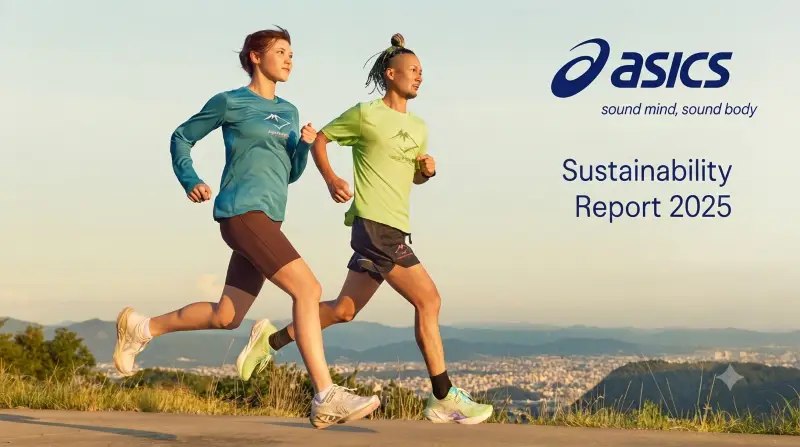
Japanese sportswear giant ASICS has recently released its Sustainability Report 2025, highlighting a period of robust growth and a sharpened focus on environmental and social stewardship.
Following four consecutive years of record-high net sales—reaching ¥810.9 billion in 2025—the company continues to emphasize that “sustainable growth and financial performance reinforce one another”.
Anchored by the core philosophy of “Sound Mind, Sound Body,” ASICS has integrated its sustainability framework into its Mid-Term Plan 2026 and long-term VISION2030.
Intimate Initiatives
- Supply Chain Transparency: ASICS is partnering with TrusTrace to deploy a new digital platform, mapping the supply chain to improve visibility and ensure compliance with global regulations such as the EU’s Corporate Sustainability Reporting Directive (CSRD).
- Biodiversity Commitment: For the first time, the company conducted a LEAP analysis (Locate, Evaluate, Assess, Prepare) to identify nature-related risks, specifically targeting water management and the impact of raw material sourcing for cotton and leather.
- Social Impact: The newly launched ASICS Foundation provides grants for sports programs in India, Cambodia, Japan, Vietnam, and Indonesia. Additionally, the “Everyday Escape” initiative encourages mental well-being through 15 minutes of daily movement.
Concerned about Challenges
ASICS openly addresses several areas where progress remains complex:
- Scope 3 Emissions: Higher production volumes are currently contributing to an increase in Scope 3 (supply chain) emissions, posing a challenge to their climate goals.
- Supply Chain Compliance: Despite commitments, audits continue to identify non-compliance issues regarding health, safety, wages, and working hours within Tier 1 suppliers.
- Data Accuracy: The company identified a need to shift from using secondary industry averages to “primary data” to more accurately measure their environmental impact.
- Health Literacy: Internal surveys reveal that while employees are effective at gathering health-related information, there is a gap in their ability to “communicate” this knowledge to others.
Strategic Targets: Progress Overview
| Target Area | 2030 / 2050 Goal | 2025 Status / Progress |
| Net-Zero Emissions | Net-Zero by 2050 | Scope 1 & 2 reduced by 44.8% (vs 2015) |
| Renewable Electricity | 100% (own operations) by 2030 | 38.2% achieved |
| Tier 1 Renewables | 100% (footwear factories) by 2030 | 24.1% achieved (up from 19.1% in 2024) |
| Recycled Polyester | 100% (shoes/sportswear) by 2030 | Over 50% achieved |
| Gender Diversity | 40% women in management by 2026 | 41% achieved (Target exceeded) |
| Disability Employment | 4% in Japan by 2026 | 3.6% achieved |