

TCF POST Report
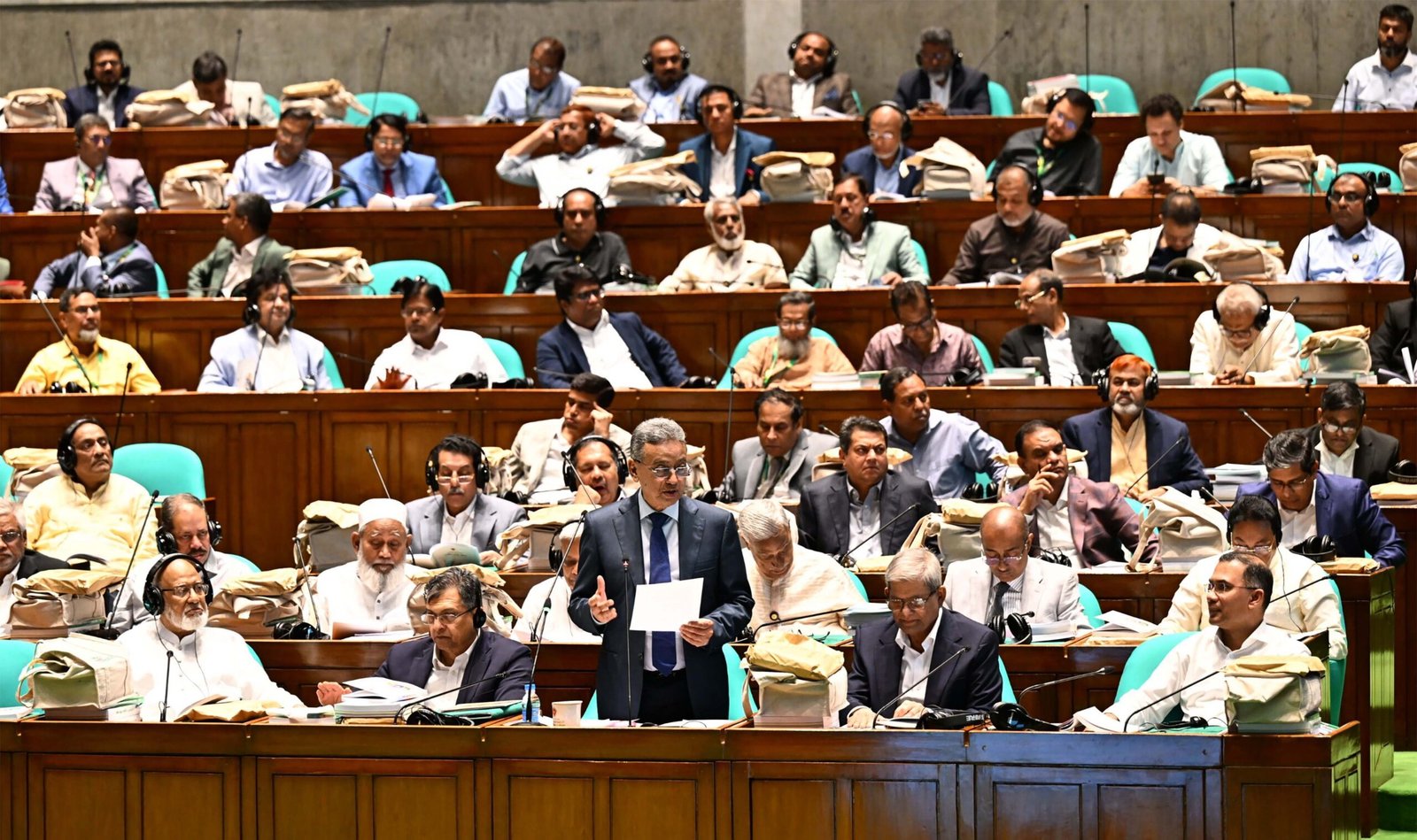
While announcing the budget for the upcoming fiscal year 2026-27, Bangladesh’s Finance Minister Amir Khasru Mahmud Chowdhury proposed a set of tax reliefs and incentives for the country’s export-oriented textile and clothing industries.
In their primary reactions, leaders of the relevant trade bodies—the BGMEA, the BKMEA, and the BTMA—praised the budget proposals as a whole.
To help the struggling apparel sector, the government announced a reduction in the withholding tax on cash incentives for exporters from 10% to 5%.
The minister is encouraging green factories by reducing their corporate tax to 10%, while standard/non-green factories will have to pay a 12% corporate tax. Furthermore, the budget proposed a corporate tax rate of 12% for subcontracting factories, instead of the standard 25%–30%.
The finance minister announced that, in line with the RMG sector, the validity of general bonds for fully export-oriented leather goods, footwear, towel, linen, and home textile manufacturers will be extended from one year to three years.
An allocation of Tk 300 crore was specifically proposed for the creative economy and craft-based industries—including handloom textiles—to be mobilized through Bangladesh Bank CSR funds.
The finance minister also proposed exempting 100 percent export-oriented, compliant garment factories from mandatory annual bond audits. Additionally, he proposed removing limits on one-time raw material stockholding in bonded warehouses and reducing the advance requirement for obtaining Utilisation Permission (UP) from 48 hours to 24 hours before shipment.
The minister has reduced the withholding tax on the supply of packaging materials from 5% to 3%.
The finance minister further proposed the extension of the customs duty exemption on chemicals imported by export-oriented factories for operating effluent treatment plants (ETPs) until June 30, 2027.
Meanwhile, to protect the domestic textile industry, the budget proposed imposing a 5 percent import duty on spandex/elastomeric/elastane, and a zero percent import duty on synthetic filament yarn of polypropylene and carbonized wool.
As polyester textured yarn and other polyester-based yarns are now produced domestically, the budget proposed imposing a 5 percent import duty on these items. Imports of polyester staple fiber (PSF) will also face a 5 percent import duty.
The industry will also benefit as the budget proposes a reduction in the tax rate on recycled products and raw materials from 3 percent to 1 percent.
Businessmen noted that a decrease in the tax at source on cotton imports from 1 percent to 0.50 percent is also encouraging.
The industry is delighted that the budget proposes treating the tax at source as an advance tax instead of a minimum tax, alongside a provision for the refund of additional tax at source.
Export-oriented factory owners also view the reduction of the duty-tax on imports of important materials for the solar power sector to zero percent as an encouraging measure.
Furthermore, the industry praised the initiative to add provisions to the Customs Act to establish free trade zones.
The BTMA, however, cautioned that the withdrawal of the existing 30 percent value addition obligation for importing raw materials through bank guarantees by some export sub-sectors could create risks for the domestic industry, citing a potential risk of misuse.