

TCF POST Report
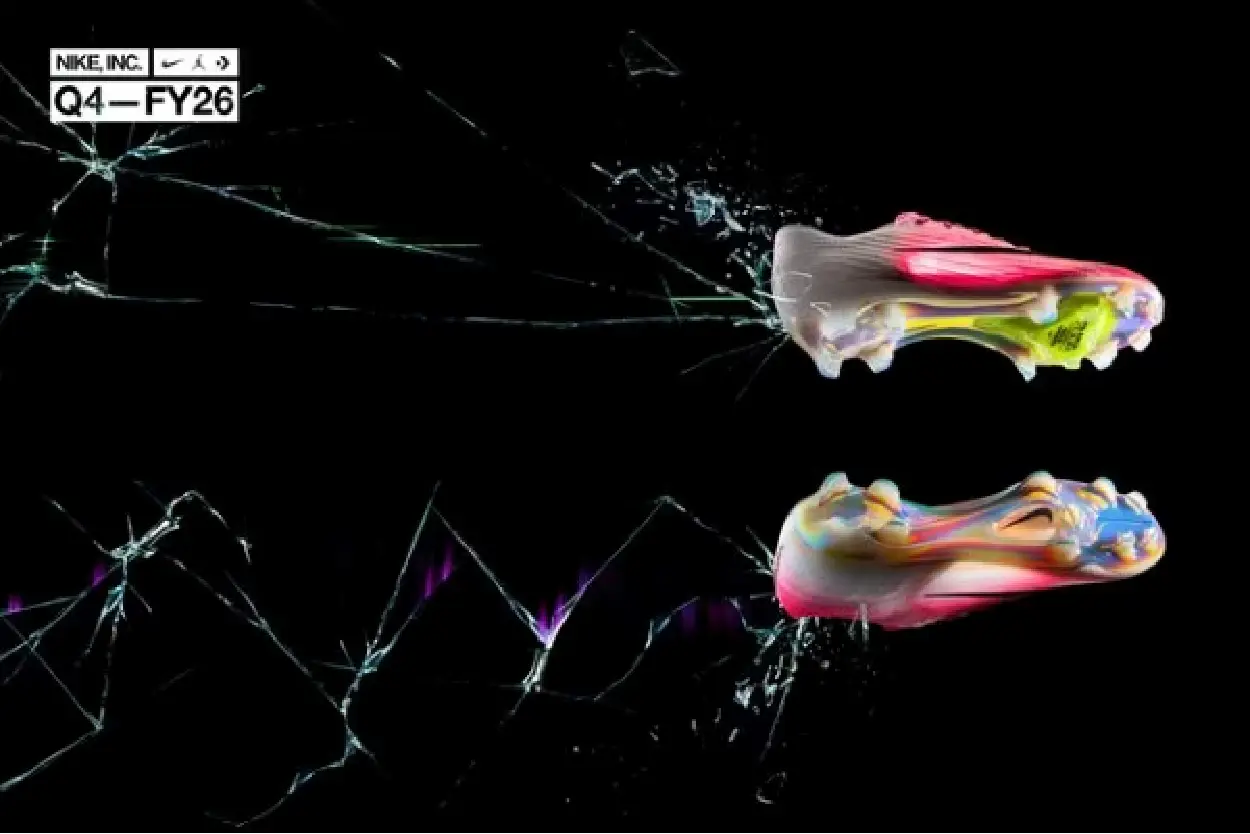
NIKE, Inc. closed its fiscal year 2026 with $46.4 billion in revenue, reflecting a stagnant market environment where flat annual performance and a 1 percent decline in the fourth quarter underscore broader challenges in consumer demand. While global top-line growth has stalled, the company’s recent financials highlight a strategic pivot toward wholesale distribution at the expense of its direct-to-consumer digital channels.
Wholesale revenues for the fourth quarter rose 4 percent, indicating that the brand is increasingly relying on third-party retailers to move product as its own digital and brick-and-mortar storefronts struggle. NIKE Direct revenues fell 7 percent in the quarter, driven by a double-digit 12 percent decline in NIKE Brand Digital. This trend suggests a cooling in the direct-engagement model that many major footwear brands heavily prioritized in previous years, signaling a shift in how consumers currently prefer to shop for performance apparel.
Profitability metrics were heavily skewed by non-operational factors. While fourth-quarter net income surged 407 percent to $1.1 billion, this was primarily driven by a $986 million recovery of International Emergency Economic Powers Act (IEEPA) tariffs.
Without this windfall, the core operating performance remained under significant pressure. The Converse subsidiary continues to face a steeper decline than the parent brand, with quarterly revenues dropping 32 percent across all territories, pointing to a difficult period for lifestyle-oriented footwear segments.
Management is now focusing on structural efficiency and “marketplace elevation” to counter these headwinds. Operating costs are being re-evaluated, and there is a clear shift toward streamlining the product portfolio. Despite the flat top-line results, the company is maintaining its commitment to shareholder returns, distributing $2.5 billion in the 2026 fiscal year through dividends and modest share repurchases, signaling a defensive posture aimed at maintaining investor confidence while navigating a period of muted global demand for athletic wear.