
DHAKA — The global textile industry is undergoing a fundamental transformation as manufacturers and brands pivot away from per- and polyfluoroalkyl substances (PFAS). According to new market projections, this shift is not merely a regulatory necessity but a major economic driver, with the PFAS-free textile repellents market expected to soar from USD 690.0 million in 2026 to USD 1,850.0 million by 2036, representing a robust 10.4% compound annual growth rate (CAGR).
The Sustainability Mandate: A Multi-Billion Dollar Opportunity
As environmental scrutiny intensifies regarding chemical persistence in ecosystems, the industry is increasingly prioritizing safer alternatives. The transition is particularly evident in the outdoor apparel sector—the market’s leading segment—which accounts for 41% of the total share in 2026.
“Companies are no longer just looking for compliance; they are seeking performance that matches the legacy of PFAS,” says Shambhu Nath Jha, Senior Analyst at Fact.MR. “Suppliers who provide clear guidance, robust test records, and support during product trials are the ones winning the trust of textile mills and global brands.”
Key Drivers and Market Dynamics
The move toward eco-sustainability is being fueled by a clear hierarchy of needs and technical requirements:
- Technology Preference: Silicone-based finishes have emerged as a critical solution, capturing a 28% market share in 2026. Their popularity stems from their ability to be integrated into existing production processes—specifically the widely used pad-dry-cure method (35% share)—with minimal disruption.
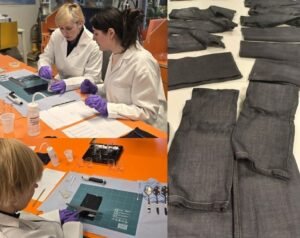
- The “Qualification Gate”: Textile mills hold the keys to this transition. Contributing 36% of the end-user share, these facilities are responsible for the rigorous testing and approval processes required to ensure that water repellency remains consistent even after repeated consumer washing.
- Strategic Growth Hubs: While China remains a central production engine, the market is seeing accelerated adoption in key economies. Germany leads the growth trajectory with an 11.9% CAGR, followed by Brazil (10.9%) and the United States (9.8%), all of which are heavily investing in local testing to validate product performance.
Challenges on the Path to Circularity
Despite the positive momentum, the industry faces distinct hurdles. The high cost of qualification—testing new chemical finishes to ensure they meet stringent performance standards—remains a barrier for many processors. Furthermore, the “documentation burden” in regions like Europe and North America often complicates the approval process, requiring brands and mills to maintain meticulous records to prove performance and environmental compliance.
Competitive Landscape
The market is currently anchored by major players who are instrumental in bridging the gap between chemical innovation and mill-floor application. Industry leaders, including Archroma and RUDOLF Group, are at the forefront of providing the necessary technical expertise. Other significant contributors, such as HeiQ, TANATEX Chemicals, and CHT Germany GmbH, are also actively shaping the competitive landscape by focusing on product quality and the reliability of results.
As the industry moves toward 2036, the successful adoption of these technologies will likely depend on the synergy between chemical suppliers and manufacturers. For brands and mills, the directive is clear: establish performance expectations early and invest in rigorous, site-specific product trials to ensure that the sustainable textiles of tomorrow meet the high-performance demands of today.