

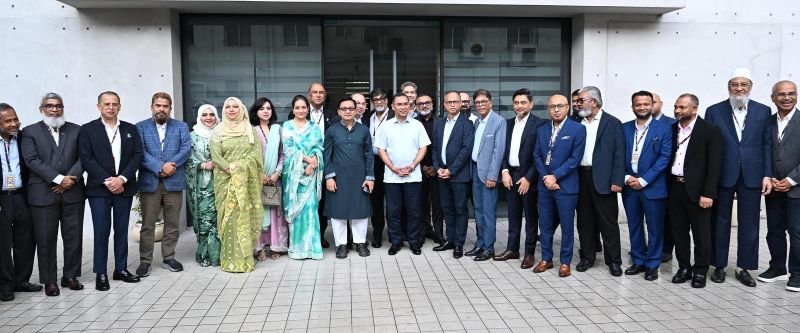
DHAKA — Prime Minister Tarique Rahman assured business leaders that tangible improvements in the country’s critical power and gas sectors will materialize within a year or so. Addressing industry concerns during separate high-level meetings on July 22 with delegations from the Bangladesh Garment Manufacturers and Exporters Association (BGMEA) and the Bangladesh Textile Mills Association (BTMA), the Prime Minister emphasized that removing infrastructural obstacles is vital to accelerating economic growth.
As an immediate step to fast-track solutions, the Prime Minister formed a high-level coordination committee comprising Commerce, Industries, and Textiles and Jute Minister Khandaker Abdul Muktadir, Finance Adviser Rashed Al Mahmud Titumir, and BGMEA President Mahmud Hasan Khan. The committee is tasked with reviewing industry demands and recommending actionable solutions within a week.
Tackling the Energy Crisis
While industrial leaders welcomed business-friendly policy measures—such as extensive tax breaks, enhanced cash incentives for apparel exporters using local yarn, and a Tk20,000 crore working capital facility—they stressed that new investments remain constrained. Severe gas shortages have forced many factories to operate well below capacity.
“The prime minister said the initiatives undertaken to resolve the energy crisis would produce visible results within the next one to one-and-a-half years. He also said a decision would be taken within the next month to install another Floating Storage Regasification Unit (FSRU),” BGMEA President Mahmud Hasan Khan Babu said after the meeting.
BTMA President Showkat Aziz Russell said, “The prime minister understands the challenges facing the industry, including the energy crisis. However, he said resolving the gas shortage will take time.”
According to his press secretary, Prime Minister Tarique Rahman also emphasized the government’s proactive stance: “The government has already begun working to resolve your problems. These are long-standing and accumulated challenges, so they will take some time to address. However, we will take immediate steps to resolve those issues that can be solved right away.”
BGMEA Outlines Key Proposals for Sustainable Growth
BGMEA presented a comprehensive set of proposals focused on operational continuity and sustainable development:
Uninterrupted Energy: Prioritizing continuous gas and electricity delivery to prevent heavy operational costs caused by alternative power generation.
PMO Fast-Track Cell: Establishing a dedicated mechanism directly under the Prime Minister’s Office to streamline customs, banking, and utility services.
Streamlined Audits: Replacing frequent National Board of Revenue (NBR) audits with annual evaluations by top-tier professional audit firms.
Infrastructure Expansions: Constructing a temporary cargo shed at Hazrat Shahjalal International Airport (HSIA) to ease handling capacity, and allocating state-owned land in Gazipur to build a specialized hospital for garment workers.
Trade and Compliance: Easing Bangladesh National Building Code (BNBC) requirements for factory expansions, allowing yarn imports through land ports, and establishing a joint service desk at the Benapole land port.
BTMA Demands Financial Flexibility
The BTMA submitted a five-point proposal focusing heavily on liquidity and financial regulations:
Working Capital for Defaulting Groups: Urged that a defaulting company within a business group should not restrict other solvent sister concerns from accessing loans, and that closed factories should be granted temporary access to working capital funds.
Credit Information Bureau (CIB) Relaxations: Requested project-based evaluations and temporary relaxation of strict CIB default rules for closed or partially closed industrial enterprises. 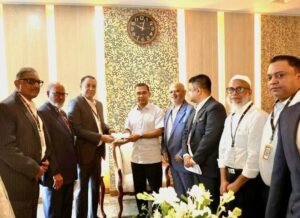
Policy Alignment and Incentives: Called for aligning textile policies with competing nations, setting a preferential 5% interest rate for the sector, and introducing a fast-track public service delivery mechanism.