

TCF POST Report
Luxury conglomerate Richemont is strategically recalibrating its Fashion & Accessories (F&A) division, signaling a long-term ambition to capture greater value from a segment that currently accounts for approximately 12% of the Group’s €22.4 billion annual sales. While the Group maintains an 11% increase in sales at constant exchange rates, it is actively diversifying its apparel and footwear offerings to remain resilient in an evolving luxury market.
The Swiss fashion group, which deals in legendary collections of jewelry, watches, pens, and leather goods for affluent customers, operates many brands, including Buccellati, Cartier, Delvaux, Dunhill, Dubuis, IWC Schaffhausen, Jaeger-LeCoultre, Montblanc, Purdey, Piaget, Roger Serapian, Vhernier, and Yoox.
Cultivating Talent: “A Bunch of Designers”
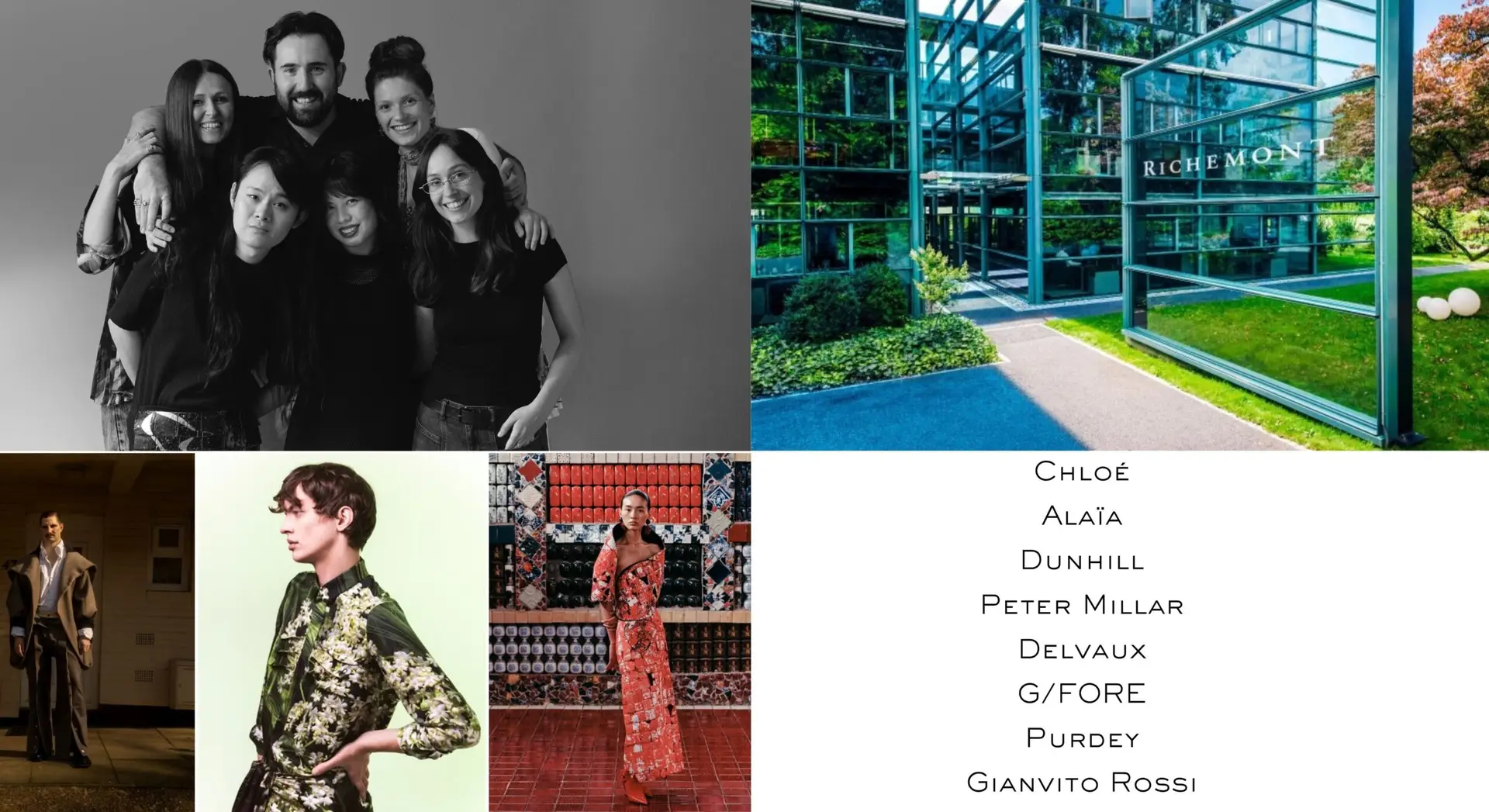
To bridge the gap between high-concept creativity and commercial viability, Richemont has launched “A Bunch of Designers,” a collective initiative emerging from the AZ Academy: Business for Designers program. This initiative acts as an operational bridge, providing six emerging talents with production support and strategic guidance.
The Designers: Craft and Concept
The six selected designers have been recognized for their unique creative universes, ranging from avant-garde tailoring to material-focused sculptural design:
- Brais Albor (Menswear): Albor challenges conventional tailoring by merging structured garments with undergarment elements. His work focuses on oversized, precise silhouettes designed to provide space and comfort for the body, specifically catering to the “bear community” through his “Love Revolution” design ethos.
- Caterina Moro (Womenswear): Moro’s collection is defined by her “E ART H – Earth as Art” philosophy. Her process involves translating the intelligence and patterns of the natural world into high-end, refined garments, positioning nature itself as the ultimate luxury.
- Liwen Liang (Wearable Sculptures): Blurring the lines between art object and apparel, Liang draws on Chinese ceramic heritage. His work experiments with unconventional materials, creating garments that serve as wearable sculptures, effectively bridging the gap between traditional craftsmanship and contemporary fashion.
- Manon Marcelot (Leather Goods): Marcelot introduces a vision of “agricultural sophistication.” By drawing inspiration from rural landscapes, machinery, and everyday farming tools, she crafts high-quality, playful leather goods and accessories that offer a distinct contrast to traditional urban fashion.
- Merle Breuker (Modular Fashion): Focused on the circular economy, Breuker’s collection, “The Lasting,” prioritizes longevity and versatility. Using leftover stock materials, her pieces are designed to be convertible and modular, allowing the wearer to adapt garments through mix-and-match functionality, emphasizing repairability and timeless utility.
- Sandra Jao (Structural Design): Jao focuses on the intersection of Japanese technical innovation and Italian craftsmanship. Her background in fine arts drives her to prioritize construction and structural integrity over superficial styling, viewing clothing as a medium for emotional expression and transformation.
The designers, mentored by ambassador Lutz Huelle, are set to debut their commercial capsule collections during Paris Fashion Week this September, focusing on a diverse range of modern fashion priorities.
Tactical Diversification and Portfolio Growth
Richemont is shifting its focus toward the future of the apparel and footwear market through targeted brand acquisitions and structural support. Recent tactical moves include:
- Strategic Expansion: The Group has bolstered its portfolio by adding the luxury footwear brand Gianvito Rossi and establishing G/FORE as a distinct Maison.
- Performance Drivers: Brands such as Alaïa, Peter Millar, and Chloé are currently demonstrating improved performance within their ready-to-wear collections, complementing the established heritage of Maisons like Delvaux, Dunhill, Montblanc, Purdey, and Serapian.