

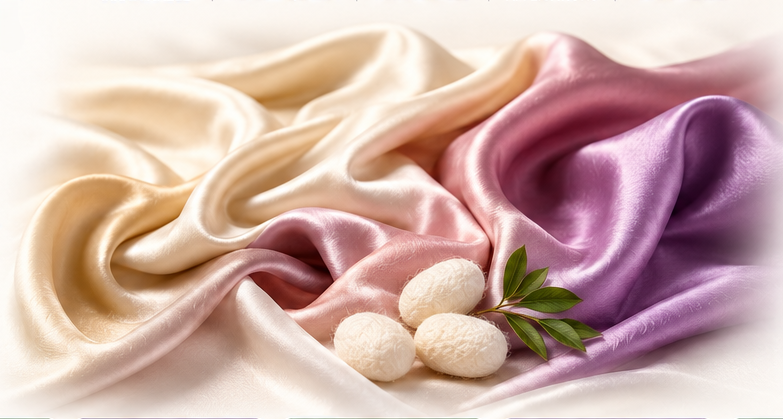
Textiles and apparel remain the market’s core growth engine, with Asia-Pacific cementing its role as both production hub and fastest-growing consumer market, as sourcing shifts toward traceable, sustainable supply
TCF POST Report
The global silk market is set for steady expansion over the next decade, growing from an estimated $20.8 billion in 2024 to $38.7 billion by 2035 — a compound annual growth rate of 5.80% — according to a new market analysis from Market Research Future (MRFR). Extending the same growth rate from the report’s 2025 base of $22.0 billion puts the market at roughly $30.9 billion by 2031, marking the midpoint of a decade-long climb driven chiefly by luxury apparel and premium textile demand.
A Market Anchored in Fashion
Textiles remain the market’s largest application segment, with silk’s continued favor among designers tied to a broader revival of vintage and retro fashion aesthetics that prize the fabric’s drape and sheen. Rising disposable incomes, particularly across emerging economies, are pushing more consumers toward premium, silk-based garments associated with elegance and status — a dynamic reflected in the fashion segment’s outsized share of overall market value.
Two adjacent categories are growing even faster than the core textile business. Home furnishings — silk curtains, cushions and upholstery — is expanding rapidly as consumers invest in more opulent interiors, while cosmetics has emerged as the fastest-growing end-use category, with silk protein increasingly used as a skincare and haircare ingredient.
Regionally, North America remains the largest silk market by value, underpinned by strong luxury-textile demand, while Asia-Pacific — home to the bulk of the world’s raw silk production — is the fastest-growing region, driven largely by a shift toward eco-friendly production practices.
Sourcing: From Cocoon to Couture
The report’s methodology offers a rare window into how tightly the silk supply chain is tracked. Analysts drew on data from the International Sericultural Commission, the UN’s Food and Agriculture Organization, India’s Central Silk Board, the China National Silk Association, the International Silk Association, and national textile agencies across major producing countries, covering everything from cocoon output and raw silk yields to trade flows and sustainability certifications such as OEKO-TEX and GOTS.
Primary interviews spanned the full value chain — from managing directors of silk reeling mills and sericultural farm operators to sustainability officers at silk cooperatives — with market values ultimately built bottom-up from cocoon output, conversion yield and average selling price across the leading producing nations: China, India, Uzbekistan, Brazil and Japan.
That supply base is visibly moving upmarket. Recent developments cited in the report include a multi-year export agreement between China’s Zhejiang Jiaxin Silk Corp. and a major Italian luxury house for premium mulberry silk fabrics, and the launch of a National Sericulture Innovation Hub by India’s Central Silk Board to modernize processing technology. At the more experimental end of sourcing, luxury group LVMH has partnered with biotech firm Spiber to weave lab-grown “Brewed Protein” silk into select high-end collections — a sign that even engineered alternatives are being pulled into premium supply chains rather than treated as a threat to them.
The Sustainability Premium
Sustainability is increasingly inseparable from the luxury growth story rather than a separate trend. The report points to rising demand for cruelty-free “Ahimsa” silk and bioengineered spider silk for high-performance textiles and medical use, alongside a broader shift toward closed-loop water systems and organic sericulture that eliminates synthetic pesticides. For producers and brands alike, the ability to pair silk’s prestige with a credible sustainability story is shaping up as a key differentiator through the rest of the decade.
Outlook
With textiles and luxury apparel still the dominant demand driver and Asia-Pacific consolidating its position as both the production hub and fastest-growing consumer market, the silk industry’s path toward $38.7 billion by 2035 looks less reliant on any single catalyst than on the steady convergence of rising luxury consumption, tightening sourcing standards, and technological innovation in production.